

It Starts with a Vision
In order to create what you want, you have to name what you want.
p. 3190,000+ people trainedFortune 500 and the UN Peace Summit
You have built something. The company works, the results are there, and people listen when you talk. Then you walk in your own front door and none of it seems to count for much. All your money cannot buy the genuine love of the person who matters most to you. You want to feel close to them, to know they are in your corner. This book gives you a place to start with the one thing you can control: yourself.
Grab your free copy →The book is free. You cover $9.97 shipping in the US. No subscription, nothing to cancel.
Trusted by

Years ago I was seeing someone long distance who told me early on that she was a little insecure, and asked me to help her with it. I like to figure things out and succeed, so I thought: great, let’s fix this. She asked me to call every day. I called every day. It took about a week for daily calls to stop being enough.
So I called twice a day. Then late at night after training, bone tired, only to be asked why I was calling so late and who had just left. The harder I worked at it, the worse it got. It ended in my living room with her scanning the place to see whether a photograph of us had been moved.
I tell you that because I was the one doing everything right and getting nowhere, and because I was wrong about what I was fixing. I could not change her insecurity for her. Nobody can do that for another person. What I could change was how I was showing up, and that turned out to be the whole game.

Every other problem in your life gave way when you put more into it. This one digs in when you push on it.
Where your attention goes, your energy follows. Most of us give our attention to the part of the relationship that hurts, and then wonder why it grows.
You have done the work already. A weekend, a course, a run of sessions. It was good while it lasted and then the old pattern walked back in the door.
Most relationship advice points you at the other person. Say it this way. Split the load fairly. Agree who does what. You have probably tried some version of that, and you found what everyone finds: you cannot reach the other person from where you are standing. They are the one part of this you do not control.
Your relationships cannot grow beyond you.
What you do control is your side of it. The vision you hold for the relationship. The expectations you set, first with yourself. The boundaries you are willing to keep. How you show up before a word is said. Move your side and the relationship moves with you, which is why we start with you and work outward. That is the whole book, and it is why I called it alchemy rather than advice.
You are the one ring you can control, and it is the ring the others respond to. Start at the center.

Your relationship is 100% you. Not fifty.
Half of it is the standard advice: meet in the middle, both of you put the work in. It is also why the standard advice stalls. You cannot do your fifty and wait. The one variable you can move is the one that changes everything, and it was on your side of the table the whole time.
You provide, you fix, you push, and none of it reads as love to the one person you most want it to. The one who was supposed to be in it with you is starting to feel like a roommate.
Someone who is glad to hear your key in the door.
Your kids get the tired, half-there version of you. The friendships that shaped you have slipped down the list over the years. Everyone assumes you are fine, and on paper you are.
Kids who know you will be there when it matters, and the friends who knew you before the title.
Your team performs and still does not fully trust you. Partners respect the results and keep you at arm's length. You lead all of it, and you are somehow alone at the top of it.
A room that opens up to you once you are in it.


In order to create what you want, you have to name what you want. That is chapter one, and everything after it points back to that. You work it on a real relationship of your own, not a case study, and it gives you four things.
Start with what you want for your own life, then understand what the other person wants for theirs. A shared vision gives you somewhere to go together. The book walks you through finding it, even if you have been together for years.
Your emotions belong to you, and so does the way you show up carrying them. They were trained in you long before you had a say in the matter. Still, nobody else can manage them but you.
Name your needs, wants and desires: the non-negotiables, what’s important, and what would be nice to have. Then say what meeting them actually looks like, so the other person can agree to something specific instead of trying to guess.
A boundary is the container your expectations sit in, and if you let one be negotiated, you never set it in the first place. The last third of the book is how to say the hard thing and stay in the room afterward.
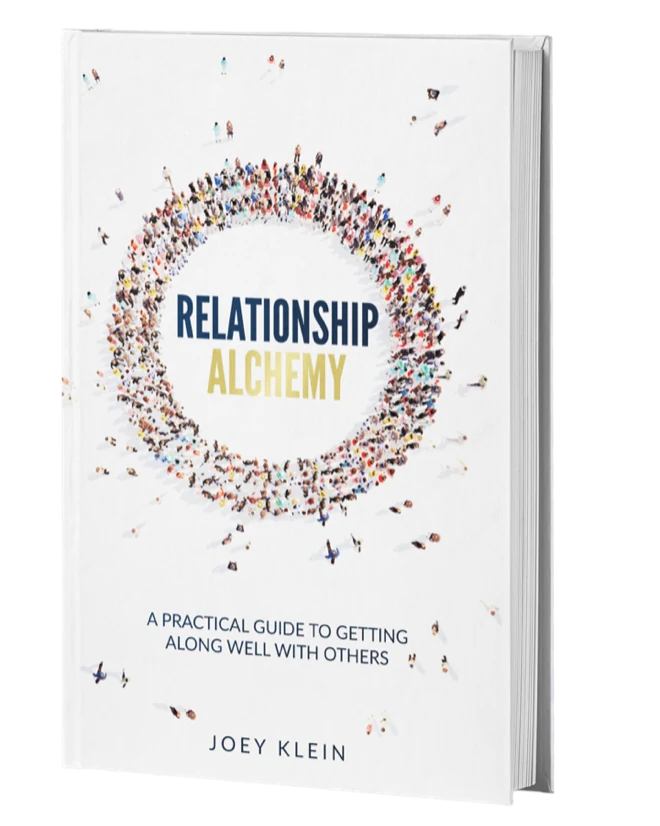
Four on you, four on the relationship, five on the other person, and one letter at the end. Each one opens with a line Joey invites you to earn.
In order to create what you want, you have to name what you want.
p. 31You’re either moving toward vision, or you’re headed somewhere else.
p. 51We don’t create from where we think we are. We create from where we actually are.
p. 67Unfulfilled expectations are the cause of pain and suffering in relationships.
p. 91Your relationship will never grow beyond you.
p. 107Boundaries are the way we uphold expectations.
p. 117Just because words are being spoken doesn’t mean communication is taking place.
p. 127If you do what you’ve always done, you’ll get what you’ve always gotten.
p. 141It takes two to tango.
p. 157No one person will meet all of your expectations.
p. 169Expectations are the root of all suffering.
p. 181Freedom lies in the ability to accept the other person.
p. 189Intentions don’t translate to new outcomes. Consistent, aligned action over time does.
p. 201A letter, and the one question the whole book comes down to.
p. 207
A paperback copy arrives in your mailbox. The book itself costs you nothing. The $9.97 covers what it takes to mail it to you, and that is the only money that changes hands.
The book is free. You cover $9.97 shipping in the US. No subscription, nothing to cancel.
After 28 years of marriage, we were headed for divorce. This book literally saved our relationship. We’re now closer than we’ve ever been.
I finally have a great relationship with my teenage daughter. The tools in this book work even with the most challenging people.
My business partnerships are thriving, my team respects me, and even my relationship with my ex-wife has healed. This book changed everything.
Reader testimonials from joeyklein.com.
I did not write this to sit on a shelf. I wrote it as a starting point, and the quickest way to show you it works is to let you run it once on a relationship that actually matters to you.
So the book is free. The $9.97 covers what it takes to ship it to you, and that is the only thing you pay for.
If it does for you what it has done for thousands of other people, you will want to know what else we do. If it does nothing for you, you have a book, and that is where it ends.

One page, one charge of $9.97. Nothing recurring and nothing that starts charging you later.
Offered once, and the book is complete without it. Saying no takes one click.
Your confirmation email has the order details in it.
A session with a senior member of Joey's team to discover the pattern driving your relationship. Optional, and an accelerant to the book.

Pick one relationship and start there.
One relationship that matters to you, and a book that costs you $9.97 to have shipped.
Grab your free copy →The next step is to tell us where to send it.
Read it, work the method on one relationship, and if nothing shifts, email us and we will refund the $9.97. We are not asking for the book back. There is no version of this where you are out of pocket and holding nothing.